|
|
|
|
Do you know what’s in the air you, your staff, patients and visitors are breathing at any point in time?
There are significant benefits to using air quality monitors in a healthcare setting:
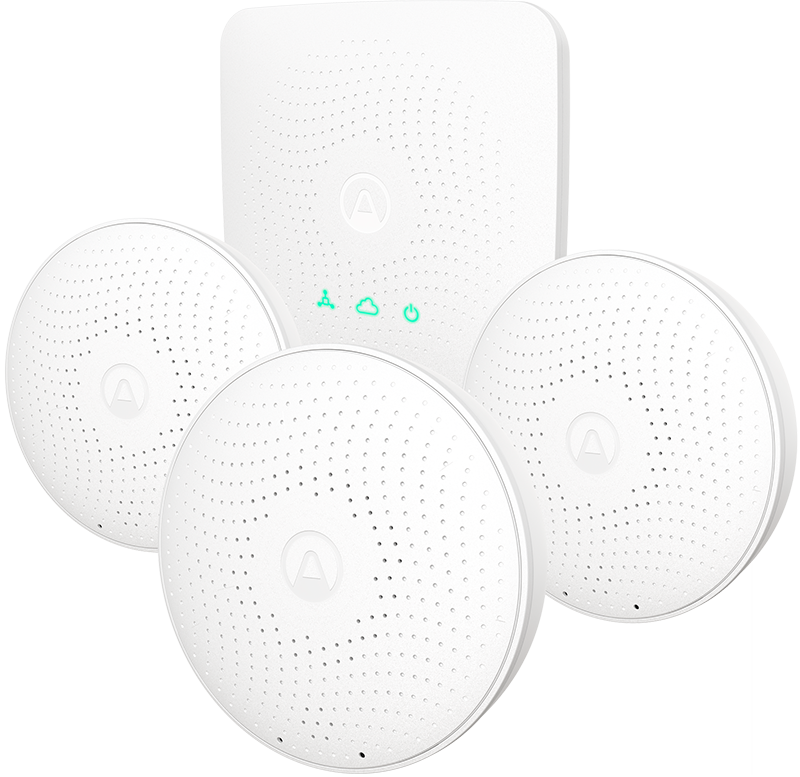
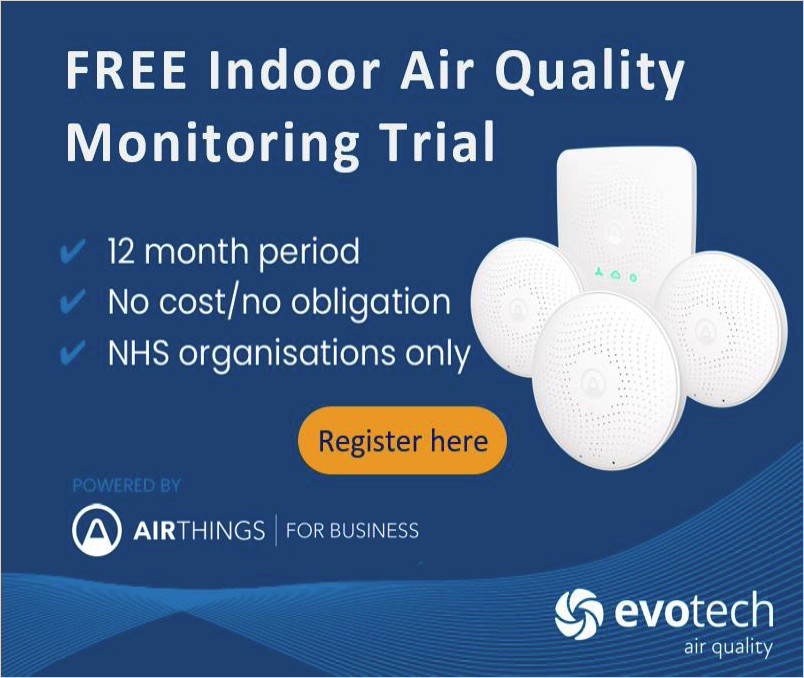
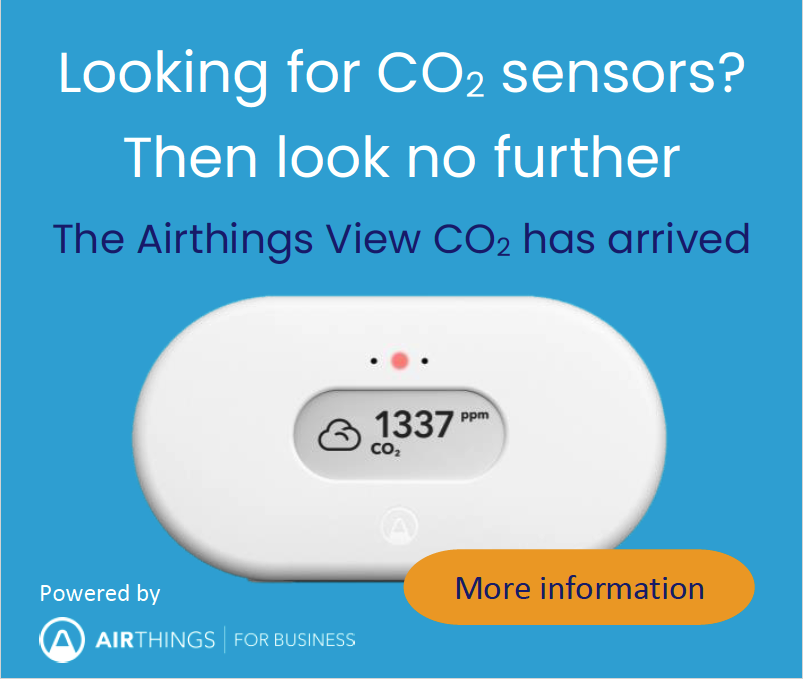
Our award winning air quality sensors, powered by Airthings, monitor contaminants including CO2, particulate matter (PM), Volatile Organic Compounds (VOCs) and Radon, at the same time as contributing environmental factors like humidity, temperature and air pressure.
|
|
|
|
Research shows that indoor air quality sensors enable action to be taken resulting in the following benefits:
|
| 1. |
Reduce the transmission of airborne viruses (alerts can be set up to indicate when individual rooms/zones need additional ventilation) |
| 2. |
Reduce indoor asthma and allergy triggers |
| 3. |
Lower absenteeism and increase productivity |
| 4. |
Improve concentration levels, cognitive ability and wellness |
| 5. |
Reduce the risk of litigation |
| 6. |
Significantly reduce energy costs & carbon emissions (when AQ sensors are integrated with suitable BMS & HVAC systems) |
|
|
|
|
|
|
|
|
|
Chris Whitty talks to CIBSE about ventilation in the post Covid world
Investing in building ventilation will play a key role in helping the country recover from the Covid-19 pandemic and prepare for future health emergencies, according to the government’s chief medical adviser, Professor Chris Whitty.
He encouraged business leaders at the recent Confederation of British Industry (CBI) conference to look closely at how they could improve the indoor air quality in their buildings to provide better long-term working conditions for their employees.
See full article
|
|
|
|
|
|
|
|
The healthcare indoor air quality conundrum
What can healthcare professionals do to help reduce
indoor air pollution and the subsequent transmission
of viruses? Evotech’s Director, John Lumb discusses
how the age of the healthcare estate can create
difficulties when it comes to managing indoor air quality.
“Recent research concluded that a small increase in air pollution leads to a large increase in the COVID-19 infectivity and mortality rate in England.”
Modern facilities within the NHS estate and other healthcare facilities are likely to have
more than adequate mechanical ventilation systems, the question is are they
effectively optimised? Older buildings in many circumstances do not have this luxury
and many struggle to meet the NHS ventilation guidelines of six air changes per hour
in wards, and other areas like offices and meeting rooms, outpatient clinics and
waiting rooms, often have no means of ventilation apart from the opening of windows.
See full article
|
|
|
|
Radon gas - the facts
Evotech Director, John Lumb, provides the facts on Radon. Exposure to radon gas is the leading cause of lung cancer in non-smokers and is responsible for more than 2,000 deaths in the UK every year, according to the UK Radon Association.
More than half of UK homes have never been tested for levels of this carcinogenic gas, and two-thirds of adults have never even heard of the substance.
“The Ionising Radiations Regulations 2017 impose a duty on employers to protect workers from exposure to radon.”
High levels of radon can build up in buildings of any type, size, or location and the only way of knowing the risk is to run a radon test or continually monitor the gas using a radon sensor.
See full article
|
|
|
|
|
|
0333 207 4245 | info@evotech.co.uk | www.evotech.co.uk
Evolution Technical Services Ltd
Northern Office: Lowfields Close, Lowfields Business Park, Elland, HX5 9DX
Southern Office: Grove House, Lutyens Close, Chineham Court, Basingstoke, RG24 8AG
North East Office: 8 Vance Business Park, Norwood Road, Gateshead, NE11 9NE
Humberside Office: Freightliner Road, Hull, HU3 4UW
|