Choosing the right green building certification (updated)
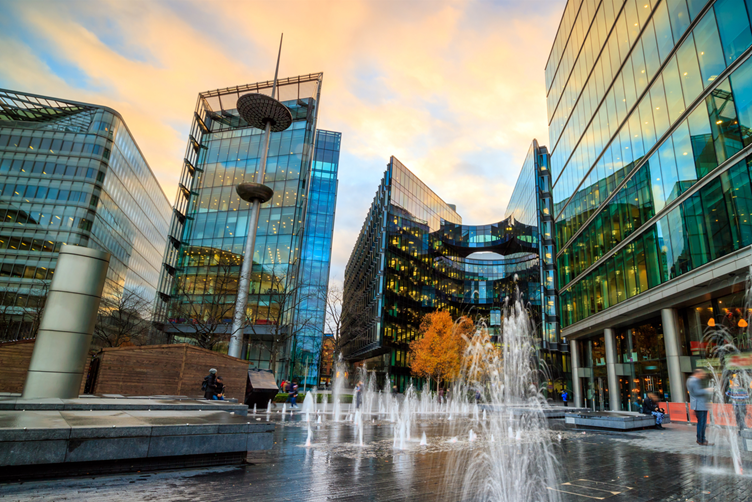
Green buildings are more sought after and proven to provide owners and investors with higher tenant satisfaction, market differentiation and a better return on investment. Regulations and environmental, social, and corporate governance reporting are also driving the push for increasing sustainability in the built environment with buildings accounting for circa 40% of the World’s CO2 emissions.
Selecting and attaining the best green building certification for your property portfolio will help drive asset value, however, the property world has become a crowded marketplace of benchmarks and certifications for ESG reporting.
There is a myriad of green building certifications available in the UK but which will be best for your building? The first step to making your decision should be to assess the stage of the property’s life cycle and look at appropriate schemes. Think about the end goal – is it to enhance occupiers’ wellbeing, to gain energy efficiency ratings and achieve savings, or a mix of these? Here’s an overview of some of the best green certifications and benchmarks for ESG strategy – some of which can be reached whilst working towards the comprehensive BREAM or LEED assessments:

ISO 14001 is the internationally recognised standard for environmental management systems (EMS). It provides a structured framework that organisations can use to manage their environmental responsibilities, improve environmental performance, meet applicable environmental obligations and achieve defined environmental objectives. The standard is applicable to organisations of all sizes and sectors and focuses on continual improvement rather than prescribing specific environmental performance targets.
The latest edition, ISO 14001:2026, was published in April 2026 and replaces ISO 14001:2015. The updated standard retains the established EMS framework whilst providing greater clarity and placing stronger emphasis on areas including climate change, biodiversity, resource efficiency, leadership, governance and environmental impacts across operations and value chains.
Minimum Energy Efficiency Scheme
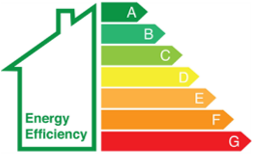
MEES is legislation governing the minimum energy efficiency standard for privately rented property in England and Wales. Since 1 April 2018, landlords of non-domestic rented properties have generally been prohibited from granting a new tenancy, or extending or renewing an existing tenancy, where the property has an EPC rating below E, unless a valid exemption applies. Since 1 April 2023, the minimum EPC E requirement has applied to all privately rented non-domestic properties within the scope of the regulations, including existing tenancies.
The Government has confirmed its ambition to increase the minimum standard for privately rented non-domestic buildings to EPC B, but the timetable and implementation arrangements have evolved from the proposals originally published in 2020. The Government's 2026 consultation and interim response are focused on strengthening implementation and enforcement of the EPC B trajectory, with current Government material referring to an EPC B requirement from 2030 or 2031 depending upon the final policy framework and scope. It should therefore not be presented as an already enacted requirement.

Fitwel is a healthy building certification system designed to support the development and operation of buildings and sites that promote health and wellbeing. Fitwel Standard v3 is now live and provides tailored scorecards for a range of existing and new buildings and sites.
The Fitwel Standard uses evidence-based strategies addressing a broad range of health behaviours and risks. Its seven Health Impact Categories cover community health, morbidity and absenteeism, social equity, wellbeing, healthy food, occupant safety and physical activity. Unlike some other certification systems, Fitwel does not use mandatory prerequisites for individual strategies, allowing projects to select measures appropriate to their specific circumstances.
The WELL Building Standard assesses how buildings and spaces can support human health, wellbeing and performance. WELL v2 is the current framework and is designed to accommodate a broad range of building types and sectors.
WELL v2 is structured around ten concepts: Air, Water, Nourishment, Light, Movement, Thermal Comfort, Materials, Sound, Mind and Community. The system incorporates mandatory preconditions alongside optional optimisations, with projects achieving certification according to the points earned through the applicable features.
The WELL framework is particularly relevant to building performance because it considers areas such as indoor air quality, ventilation, thermal comfort, lighting, acoustics and the wider conditions that influence occupant health and wellbeing.
Building Research Establishment Environmental Assessment Method (BREEAM)
BREEAM is an internationally recognised sustainability assessment and certification framework developed by BRE. It provides independent assessment of the environmental, social and economic performance of buildings and infrastructure across different stages of the asset lifecycle.
BREEAM assessments consider a wide range of factors, including management, energy, water, transport, health and wellbeing, resources, resilience, land use and ecology, pollution, materials, waste and innovation. BREEAM ratings range from Pass through Good, Very Good and Excellent to Outstanding, with Acceptable applying to the In-Use scheme.
BREEAM provides a suite of standards covering different project types and lifecycle stages, including new construction, buildings in operation, refurbishment and fit-out, residential projects, infrastructure and communities, including:
BREEAM In Use
BREEAM In-Use provides a framework for property investors, owners, managers and occupiers to assess and improve the sustainability and operational performance of existing assets. The standard supports benchmarking, assurance and validation of operational asset data and can be applied across a wide range of operational asset types. It can help organisations identify opportunities to reduce environmental impact and operational costs, support net zero and ESG objectives, improve asset performance and provide independent third-party assurance.

The Home Quality Mark is BRE's certification scheme for the residential sector. It provides a framework for assessing and communicating the quality and performance of new homes, helping consumers understand factors that can influence running costs, health and wellbeing, environmental performance and the overall quality of their home.
BREEAM Infrastructure
BREEAM Infrastructure, formerly known as CEEQUAL, is a sustainability assessment and rating scheme for civil engineering, infrastructure, landscaping and public realm projects and contracts. It supports clients, designers and contractors in incorporating sustainability into the design, construction, maintenance and refurbishment of infrastructure assets.
BREEAM Refurbishment and fit out
BREEAM Refurbishment and Fit Out provides a structured framework for improving the sustainability and performance of refurbishment and fit-out projects. The standard supports project teams in reducing environmental impacts, improving efficiency and delivering positive environmental, social and economic outcomes whilst supporting the commercial objectives of the project.
Care Home Energy Efficiency
BRE has developed energy efficiency assessment tools specifically for care homes to help operators identify appropriate energy efficiency improvements. The approach is designed to help care home operators understand opportunities to reduce energy consumption and costs whilst maintaining appropriate levels of comfort for residents. It can support the identification and prioritisation of practical energy efficiency measures and provide guidance around potential routes to funding and procurement.
Global Real Estate Sustainability Benchmark (GRESB)

GRESB provides an investor-driven global sustainability benchmark and reporting framework for real estate and infrastructure. Its assessments are used by property companies, funds, developers, investors and other real estate stakeholders to measure, benchmark and improve sustainability performance.
The GRESB Real Estate Assessment considers sustainability performance across portfolios and provides validated data, scoring, benchmarking and insights that can support investment decisions, sustainability strategies, stakeholder engagement and reporting. The assessment methodology continues to evolve in response to developments in the real estate sector and investor priorities.
GRESB also recognises a range of building certification schemes within its assessment framework, including BREEAM In-Use, AirRated AirScore and other recognised certification systems.

NABERS UK is administered by CIBSE Certification and provides independent, performance-based energy ratings for buildings in the United Kingdom. The scheme currently provides two principal products for office buildings: NABERS UK Design for Performance and NABERS UK Energy for Offices. Design for Performance is used during the design and delivery of a new office development or major refurbishment, with the project team committing to achieving a specified operational energy rating. Energy for Offices measures the energy efficiency of an operational office building using metered energy data and compares performance against established benchmarks.
NABERS UK Energy for Offices ratings have also been recognised as a Deemed to Satisfy pathway for the operational energy requirements of the UK Net Zero Carbon Buildings Standard, providing an alternative route based on verified in-use performance.

SKArating is an environmental assessment method specifically designed for interior fit-out and refurbishment projects. It enables landlords, tenants and project teams to assess, benchmark and demonstrate sustainability performance against recognised good practice.
The current SKArating framework considers three sustainability pillars: Environmental, Social & Wellbeing, and Economic & Value. The scheme has recently undergone significant development, including the launch of Offices Environmental 2.0, which provides an updated framework for sustainable office fit-outs.
SKArating provides opportunities for informal self-assessment as well as quality-assured assessment and certification by accredited assessors. Current certification levels are Bronze, Silver and Gold.
Leadership In Energy and Environmental Design (LEED)
LEED is a globally recognised green building rating system developed by the U.S. Green Building Council (USGBC). It provides a framework for designing, constructing, operating and maintaining buildings and spaces with improved environmental performance, energy and water efficiency, indoor environmental quality and resource efficiency.
LEED v5 is now the latest version and is currently available for Building Design and Construction, Interior Design and Construction, and Operations and Maintenance. LEED v4 and v4.1 remain available for certain registrations during their transition periods.
Projects must satisfy applicable prerequisites and earn points through selected credits. Certification levels are Certified, Silver, Gold and Platinum. LEED projects undergo documentation review and verification through Green Business Certification Inc. (GBCI), rather than simply being awarded certification based on self-assessment.
LEED can be applied to a wide range of building types and lifecycle stages, including new construction, major renovation, interior fit-outs and existing building operations and maintenance.
Planet Mark Development Certification

Planet Mark Development Certification supports developers and project teams in measuring and reducing the whole-life carbon impact of developments whilst embedding wider sustainability considerations throughout the project lifecycle.
The current certification approach includes a Life Cycle Assessment of the building, consideration of whole-life carbon over a 60-year period and independent verification. The programme is aligned with the UK Net Zero Carbon Buildings Standard and can support alignment with other sustainability frameworks, including BREEAM.
The certification also considers wider areas such as supply-chain engagement and community impact, supporting a more holistic approach to sustainable development and carbon reduction.
AirRated's AirScore provides a benchmark for indoor air quality in buildings, using sensor-based monitoring and data-driven assessment. The AirScore methodology considers five fundamental indoor air quality parameters: PM2.5, carbon dioxide (CO₂), total volatile organic compounds (TVOCs), temperature and humidity. Monitoring data is analysed against the AirRated scoring methodology to assess indoor environmental conditions and identify opportunities for improvement.
AirRated is recognised within the GRESB building certification scheme list for both design and construction and operational applications, reinforcing its relevance to the assessment of indoor environmental performance within real estate portfolios.

WiredScore is a global certification system for digital connectivity within the built environment. It provides a framework for assessing, benchmarking and improving the digital infrastructure and connectivity of buildings.
WiredScore certification considers factors including connectivity, technology resilience and future readiness, helping landlords, developers and asset managers understand the quality and resilience of their buildings' digital infrastructure. Certification is available across a growing range of asset types, including offices, industrial buildings, homes, neighbourhoods and portfolios.
SmartScore is a global certification for technologically advanced smart buildings. It provides a benchmark for assessing how effectively smart technology is integrated into a building to improve user experience, operational efficiency, sustainability and long-term asset performance. SmartScore is available for offices, neighbourhoods, portfolios and hotels, and focuses on the technologies and capabilities that contribute to effective, user-focused smart building performance.
RESET is a modular, data-driven building standard and certification programme focused on measurable performance, transparency and continuous improvement.
RESET Air is specifically focused on indoor air quality and requires continuous monitoring using air quality monitors. The current standard measures PM2.5, TVOCs, CO₂, temperature and relative humidity, with data streamed to a cloud platform for ongoing analysis and reporting. The standard is performance-based and provides defined targets against which indoor air quality can be assessed.
RESET Air is applicable to both commercial interior and core-and-shell projects. The Core & Shell pathway is particularly relevant to mechanical and HVAC systems, monitoring and communicating the quality of air delivered to tenant and public spaces.
RESET has also developed standards covering areas including embodied carbon, health, circularity, energy, water and waste, supporting a broader data-first approach to healthier, more sustainable and lower-carbon buildings.

CyclingScore assesses buildings according to standards designed to determine their cycle and micro-mobility friendliness.
The assessment considers the quality, infrastructure and readiness of cycling and active-commuting facilities, helping landlords and developers benchmark and improve the facilities available to occupants and residents. This can include facilities such as secure cycle parking, changing facilities and other infrastructure that supports active travel.
CyclingScore certification is available to commercial and residential buildings, including buildings in development and redevelopment.
And, why is all this so important, well here's some statistics to bring the whole emobodied carbon and carbon emissions from the built environment to light (Source: Architecture 2030):
The built environment
Architecture 2030 currently estimates that the global built environment is responsible for approximately 42% of annual global CO₂ emissions. Building operations account for approximately 27%, whilst embodied emissions associated with cement, iron, steel and aluminium account for a further 15%.
The scale of future construction also presents a major challenge. Architecture 2030 estimates that between 2020 and 2060 the world is expected to add approximately 2.6 trillion square feet of new building floor area, equivalent to adding an entire New York City to the world every month for 40 years.
Energy use
Around 27% of annual global CO₂ emissions are associated with building operations, according to Architecture 2030. This highlights the importance of improving the operational performance of existing buildings as well as ensuring that new buildings are designed and commissioned to perform efficiently.
There is also significant potential to reduce energy consumption through improved building operation, controls, commissioning, maintenance and optimisation. The U.S. Department of Energy estimates that approximately 30% of energy used in commercial buildings is wasted, illustrating the scale of the opportunity for operational efficiency improvements.
Embodied Carbon
Embodied carbon is increasingly important as operational energy efficiency improves. Architecture 2030 estimates that embodied emissions from cement, iron, steel and aluminium account for approximately 15% of global annual CO₂ emissions.
The organisation also highlights that concrete, steel and aluminium alone are responsible for approximately 23% of total global emissions, most of which are associated with the built environment. This demonstrates why material selection, specification, reuse, circularity and whole-life carbon assessment are becoming increasingly important considerations in building design and development.
Turning Standards into Building Performance
At Evotech Technical Services, we help building owners, operators and occupiers turn sustainability standards and performance objectives into measurable results.
Through building performance assessments, HVAC optimisation, energy analysis, monitoring and ongoing performance improvement, we identify opportunities to reduce energy consumption, operational carbon and running costs whilst improving system efficiency, occupant comfort and building performance.
Our practical, data-led approach can support clients in meeting the requirements and objectives of a wide range of environmental, energy and wellbeing standards and certification schemes.
If you require any help or advice with your building performance journey, please call our team on 0333 207 4245.
Return to topLatest Articles

Fire Door Safety Week highlights worrying generational gaps in fire door awareness
Read More >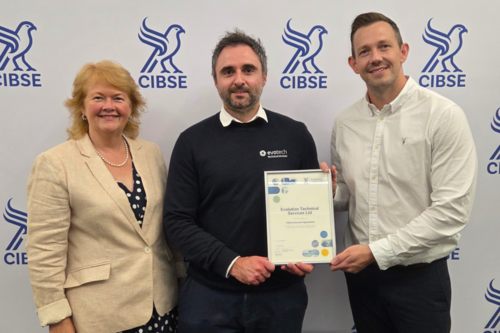
Evotech Achieves Prestigious CIBSE Endorsed Organisation Status
Read More >
UKGBC calls for greater focus on climate resilience across non-domestic buildings
Read More >
Outstanding Audit Results for Evotech Engineers at Chapel & Friary Walk Shopping Centre
Read More >