UKGBC calls for greater focus on climate resilience across non-domestic buildings
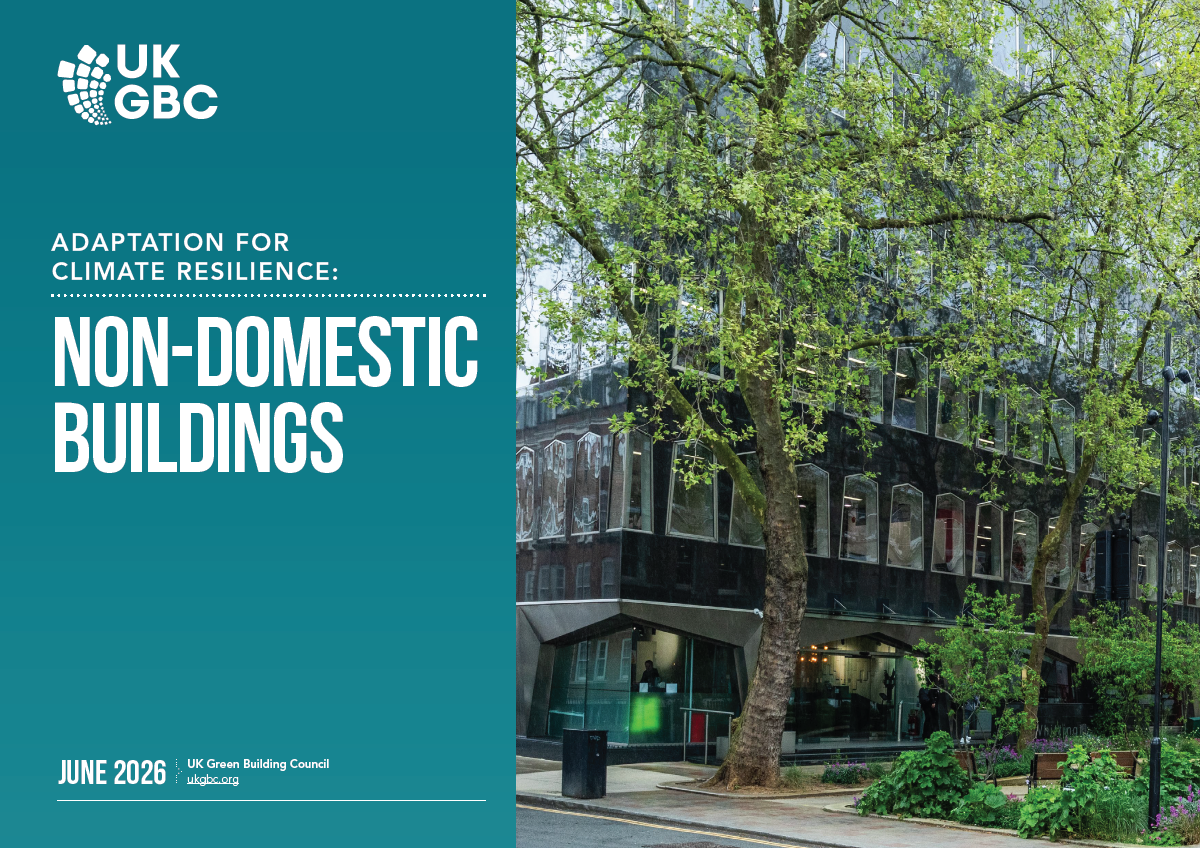
Evotech welcomes new UK Green Building Council guidance highlighting the urgent need for building owners and operators to prepare existing commercial and non-domestic buildings for increasing climate risks.
The UK Green Building Council (UKGBC) has published new guidance, Adaptation for Climate Resilience: Non-Domestic Buildings, providing practical measures that building owners, asset managers and facilities teams can implement to improve the resilience of existing buildings to climate change.
The June 2026 report highlights how increasingly frequent and severe climate hazards are already affecting the UK's built environment, with consequences including risks to occupant health and wellbeing, disruption to building operations, increased financial exposure and potential damage to assets.
Climate resilience is becoming an operational priority
The scale of the challenge is highlighted by figures included within the report. UK businesses experienced £155 million in insurance claims following Storms Babet, Ciaran and Debi in 2023, whilst the average cost of weather-related claims increased by 73% between 2018 and 2023. The report also states that £124 million in weather-related business insurance claims were recorded between April and June 2025.
For London, the report identifies that 42% of commercial buildings are at risk of flooding, whilst overheating is estimated to have resulted in £1.2 billion a year in lost productivity between 1998 and 2021, even with some adaptation measures already in place.
The UKGBC guidance focuses on four key climate hazards: flooding, storms, overheating and drought. It sets out a range of building-level interventions, categorised according to the scale of retrofit required, from optimisation and maintenance through to light and deep retrofit.
Practical measures can make a significant difference
A key message from the report is that climate resilience should begin with understanding how a building currently performs and identifying the hazards to which it is exposed. Building surveys, inspections, energy and water-use data, occupant feedback and insurance claims can all help establish where improvements may be required.
The report also emphasises the importance of aligning resilience improvements with existing maintenance and refurbishment programmes. Identifying suitable 'trigger points', such as changes of tenancy, vacant possession or planned maintenance and refurbishment cycles, can enable more significant improvements to be delivered whilst minimising disruption to occupants.
For facilities and building management teams, the guidance identifies a number of optimisation measures that can be incorporated into routine maintenance. These include clearing gutters and drainage systems, repairing water leaks, checking cooling systems, inspecting roofs, façades and building services for damage, and ensuring existing shading and cooling measures are being used effectively.
More substantial interventions identified by the UKGBC include improved insulation, mechanical cooling and ventilation, passive ventilation, external solar shading, green roofs, rainwater harvesting and greywater recycling. For flood and storm resilience, measures include improved drainage capacity, flood protection to building openings, Sustainable Drainage Systems, basement pumping systems, anchoring roof-mounted equipment and raising essential services above expected flood levels.
Taking a whole-life approach to building resilience
The guidance makes clear that climate adaptation should not be considered in isolation. Measures need to be assessed alongside wider objectives such as net zero, circularity, nature, health and wellbeing, with potential benefits and trade-offs considered before investment decisions are made.
For building owners, this reinforces the value of taking a coordinated approach to asset management, condition assessment, planned preventative maintenance and capital investment. Understanding the condition and performance of existing assets provides a stronger basis for determining where intervention is required, when it should be undertaken and how it can be integrated with other planned works.
Evotech Technical Services supports the principles set out in the UKGBC guidance and recognises that building resilience increasingly needs to form part of long-term asset and maintenance strategies. Effective building management, regular condition assessment and appropriately planned investment can help organisations protect their assets, maintain operational continuity and respond to changing environmental risks.
The UKGBC report concludes that understanding how a building operates and the climate hazards it faces, both now and in the future, is fundamental to identifying appropriate adaptation measures. It also calls for continued climate risk assessments and post-occupancy evaluations to ensure building management and resilience strategies remain current as climate science and risks evolve.
Latest Articles

Fire Door Safety Week highlights worrying generational gaps in fire door awareness
Read More >
Evotech Achieves Prestigious CIBSE Endorsed Organisation Status
Read More >
Choosing the right green building certification (updated)
Read More >
Outstanding Audit Results for Evotech Engineers at Chapel & Friary Walk Shopping Centre
Read More >